Market Overview
The study on the global Aerospace 3D Printing Market examines the current competitive development of the market. The study covers all the essential market components that market participants need to make business decisions or new investments in the global Aerospace 3D Printing commerce market. The article analyzes the current economic situation of the Aerospace 3D Printing trading industry on national and international markets using data from reliable sources and established analysis methods. Based on these findings, the current economic situation, and existing models, the study creates future market assessments.
The study provides insight into key opinions, growth plans, product offerings, growth aspirations, and other industry aspects for more than 100 international markets, competitors, and Fortune 500 + companies. The study includes the most effective techniques for newcomers to the global Aerospace 3D Printing business sector, along with detailed market size analysis, market insights, and opportunity assessments. The report studies the Global Commercial Aerospace 3D Printing Market providing insights into the market drivers, opportunities, specific challenges, and threats that cannot be ignored.
For insights on global, regional, and country-level parameters with growth opportunities from 2023 to 2032 – Download a sample report @ https://market.us/report/aerospace-3d-printing-market/request-sample/
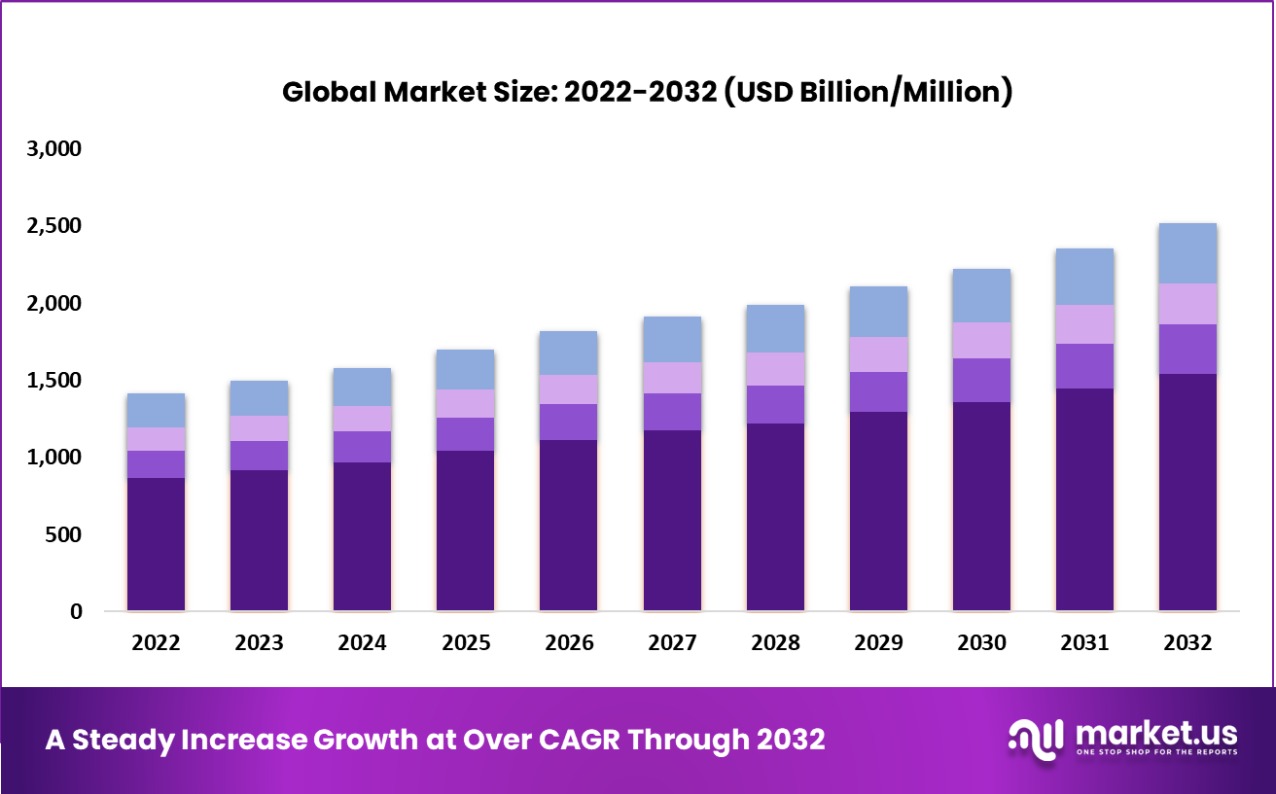
Top Aerospace 3D Printing Market Segments
Type
- Plastics Material
- Ceramics Material
- Metals Material
- Other Material
Application
- Civil Aviation
- Military Aviation
- Spacecraft
- Others
Top Aerospace 3D Printing Market Companies
- Stratasys
- 3D Systems
- Arcam Group
- Renishaw
- ExOne
- Optomec
- SLM Solutions
- EnvisionTEC
- VoxelJet AG
- Sciaky Inc
- EOS e-Manufacturing Solutions
- GE
Aerospace 3D Printing Market Regional Analysis
-North America [United States, Canada, Mexico]
-South America [Brazil, Argentina, Columbia, Chile, Peru]
-Europe [Germany, UK, France, Italy, Russia, Spain, Netherlands, Turkey, Switzerland]
-Middle East & Africa [GCC, North Africa, South Africa]
-Asia-Pacific [China, Southeast Asia, India, Japan, Korea, Western Asia]
You Can Directly Purchase This Report From Here: https://market.us/purchase-report/?report_id=17050
Driver
- Weight Reduction and Fuel Efficiency: The aerospace industry’s drive for weight reduction and fuel efficiency is a significant driver for the adoption of 3D printing technology. Additive manufacturing allows the production of complex and lightweight components, leading to fuel savings and enhanced performance in aircraft and spacecraft.
Opportunities
- Rapid Prototyping and Design Iterations: Aerospace 3D printing enables rapid prototyping and design iterations, reducing development cycles for new aircraft and spacecraft. This capability accelerates innovation and facilitates the testing of new designs before final production, leading to improved products.
- Customization and Complexity: Additive manufacturing allows the creation of highly customized and intricate parts, tailored to specific aircraft and mission requirements. This customization opens up opportunities for aerospace companies to offer personalized solutions and optimize performance.
Challenges
- Material Qualification and Certification: The aerospace industry operates under stringent safety and regulatory standards. Qualifying and certifying 3D printed materials and components for aerospace applications require rigorous testing and validation, which can be time-consuming and costly.
- Scale and Production Rate: 3D printing is well-suited for low-volume production and prototyping, but challenges arise when scaling up production for high-volume aircraft manufacturing. The industry faces hurdles in achieving cost-effective and efficient large-scale production using additive manufacturing.
- Quality Control and Consistency: Ensuring consistent quality and reliability of 3D printed parts is a challenge. Variability in printing processes and materials can affect part integrity, necessitating robust quality control measures to meet aerospace standards.
Aerospace 3D Printing Market Report Objectives
• To study the global Aerospace 3D Printing market size by value and size.
• To calculate Aerospace 3D Printing market segments, consumption, and other dynamic factors of different market entities.
• Determination of the main market dynamics Aerospace 3D Printing.
• To highlight the main trends of the Aerospace 3D Printing market related to production, revenue, and revenue.
• Summary of the major players in the X Aerospace 3D Printing industry
• Presentation of the performances of different regions and countries in the global Aerospace 3D Printing market.
What to Expect in Our Report?
(1) The comprehensive section of the global Aerospace 3D Printing market report is devoted to market dynamics, including influencing factors, market drivers, challenges, opportunities, and trends.
(2) Another important part of the study is reserved for the regional analysis of the Global Aerospace 3D Printing Market, which evaluates key regions and countries regarding growth potential, consumption, market share, and other pertinent factors that point to their market growth.
(3) Players can use the competitor analysis in the report to create new strategies or refine existing ones to meet market challenges and increase Aerospace 3D Printing’s global market share.
(4) The report also examines the competitive situation and trends, throwing light on business expansion and ongoing mergers and acquisitions in the global Aerospace 3D Printing market. It also shows the degree of market concentration and the market shares of the top 3 and top 5 players.
(5) The readers are provided with the study results and conclusions contained in the Aerospace 3D Printing Global Market.
The Aerospace 3D Printing Market Research Clears Away The Following Queries
• What are the current and future prospects of the global Aerospace 3D Printing market based on region?
• What tactics do Aerospace 3D Printing marketplace providers use to ensure stiff competition for their trading partners?
• What are the macro and microeconomic factors affecting the global Aerospace 3D Printing market?
• Which end-use segment is expected to be the leading one by the end of 2032?
• Why does the region have the highest consumption of Aerospace 3D Printing?
For insights on global, regional, and country-level parameters with growth opportunities from 2023 to 2032 – Download a sample report @ https://market.us/report/aerospace-3d-printing-market/request-sample/
Get in Touch with Us:
Business Development Team – Market.us
Market.us (Powered By Prudour Pvt. Ltd.)
Address: 420 Lexington Avenue, Suite 300 New York City, NY 10170, United States
Tel: +1 718 618 4351
Send Email: [email protected]