Market Overview:
The cruise market has witnessed significant growth and transformation over the years. With an increasing number of travelers seeking unique experiences, cruise vacations have gained popularity worldwide. This market overview provides insights into the key aspects, trends, challenges, and opportunities within the cruise industry.
The global Cruise Market size was valued to be worth USD 7.9 billion in 2022. From 2023 to 2032, it is estimated to reach USD 22.8 billion growing at a CAGR of 11.5%. The growth of the market is attributed to factors such as increasing disposable income, rising demand for experiential travel, and the growing popularity of cruise tourism among millennials.
Navigate Market Trends: Assess Market Potential with Our Comprehensive Market Overview – Download Our Sample Now!
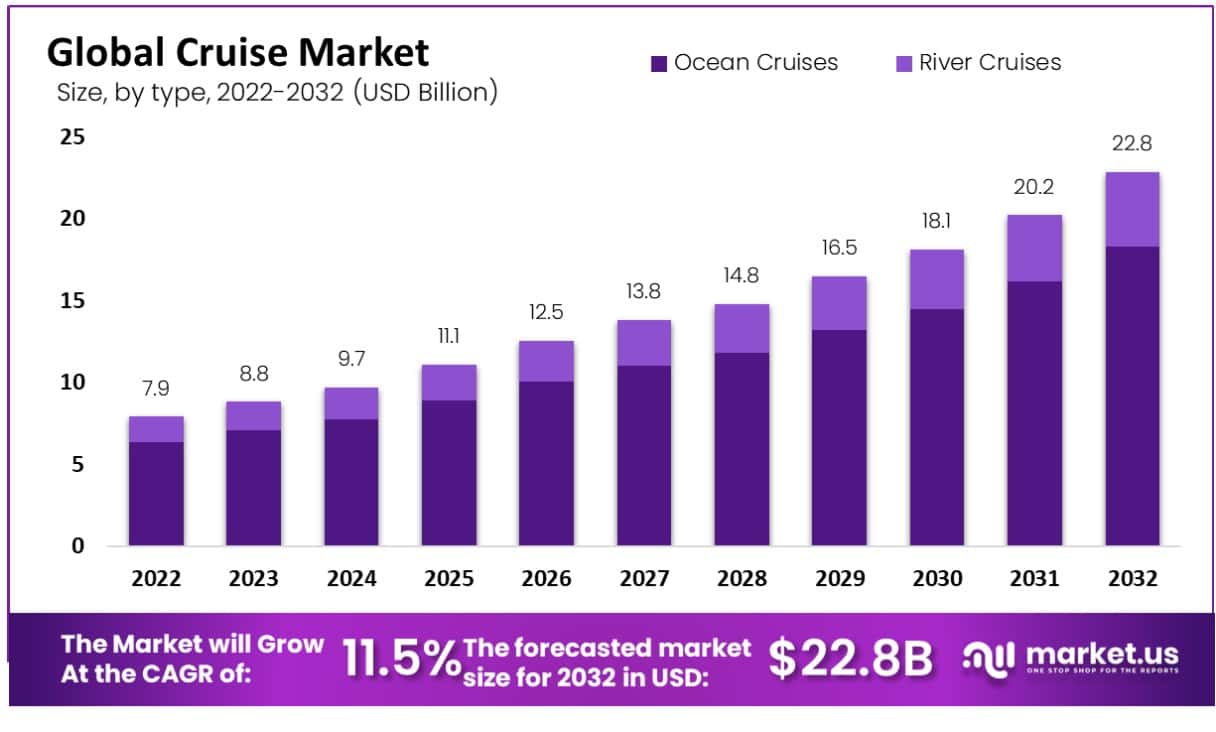
The following are the top 5 trends that are propelling sales in the cruise market:
- Increase in demand for luxury cruises: Luxury cruises are becoming increasingly popular among consumers, as they offer a more exclusive and luxurious experience. This trend is expected to continue in the coming years, as more and more consumers seek out high-end travel experiences.
- The growing popularity of river cruises: River cruises are becoming increasingly popular, as they offer a more relaxed and scenic experience. This trend is particularly pronounced in Europe, where river cruises are a popular way to see the continent’s many historical and cultural attractions.
- Expanding into new markets: Cruise lines are expanding into new markets, such as Asia and Africa, in order to tap into the growing demand for cruise tourism in these regions. This trend is expected to continue in the coming years, as cruise lines seek to grow their businesses and reach new customers.
- Increasing focus on sustainability: Cruise lines are increasingly focused on sustainability, as they seek to reduce their environmental impact. This trend is expected to continue in the coming years, as consumers become more aware of the environmental impact of travel.
- Emerging technologies: Emerging technologies, such as virtual reality and augmented reality, are being used by cruise lines to enhance the customer experience. This trend is expected to continue in the coming years, as cruise lines seek to offer more immersive and interactive experiences to their customers.
Buy the report today and receive exclusive access to industry trends and forecasts @ https://market.us/purchase-report/?report_id=22103
The cruise market is a diverse and growing industry, and the trends discussed above are just a few of the factors that are shaping the market. As the industry continues to evolve, it will be interesting to see how these trends play out and what new opportunities they create for cruise lines and consumers.
Here are some additional key takeaways from the cruise market:
- The United States is the largest market for cruises, followed by Europe and Asia.
- The contemporary cruise segment is the largest segment, followed by the premium and luxury segments.
- The demand for cruises is expected to be driven by factors such as increasing disposable income, rising demand for experiential travel, and growing popularity of cruise tourism among millennials.
- The cruise market is facing some challenges, such as the COVID-19 pandemic and the environmental impact of cruise tourism.
- However, the market is expected to grow in the coming years, as cruise lines adopt new technologies and strategies to address these challenges.
Market Dynamics
Drivers:
- Growing disposable incomes and middle-class population worldwide.
- Desire for unique and experiential travel experiences.
- Increasing preference for hassle-free and all-inclusive vacations.
- Expanding port infrastructure in emerging markets.
Restraints:
- Geopolitical uncertainties and travel restrictions.
- Environmental concerns and sustainability challenges.
- Volatile fuel prices impacting operational costs.
Opportunities:
- Expanding into new markets and exploring untapped destinations.
- Developing niche cruise segments to cater to specific customer preferences.
- Collaborating with local authorities and tourism boards for destination development.
Challenges:
- Environmental regulations and sustainability targets.
- Health and safety concerns, particularly during public health emergencies.
- Intense competition within the cruise industry.
Connect with our analysts to discuss the market and gain strategic insights@ https://market.us/book-appointment/?report_id=22103
Market Segments:
Based on Type
- Ocean Cruises
- River Cruises
Key Players
- Carnival Corporation & Plc
- Royal Caribbean Group
- MSC Cruises S.A.
- Norwegian Cruise Line Holdings Ltd.
- Disney Cruise Line
- Genting Hong Kong Limited
- Fred. Olsen Cruise Lines
- Other Market Players
Market News
- Carnival Corporation & plc announced in February 2023 that it would be investing $1 billion in new cruise ships. This investment is expected to boost the global cruise market in the coming years.
- Royal Caribbean Cruises Ltd. announced in March 2023 that it would be expanding its cruise operations in Asia. This expansion is expected to boost the cruise market in Asia in the coming years.
Regional Landscape:
The cruise market’s regional landscape is diverse, with various regions experiencing varying levels of growth and demand. Key regions include North America, Europe, Asia Pacific, and Latin America. Each region offers unique opportunities and challenges for cruise operators.
Country Wise Revenue Share (%) 2023
- United States: 49.9%
- Germany: 8.3%
- Australia: 6.5%
- Japan: 5.7%
- North America: 65.1%
- Europe: 26.8%
- United Kingdom: 4.3%
Explore More Reports
- Cell Counting Market Size Analysis (2023-2033)
- Nebulizer Market Supply and Demand 2023
- Home Healthcare Market Trend Analysis Report by 2033
- Obesity Treatment Market Global Report [PDF – 2023]
- Peptic Ulcer Drugs Market Growth Rate By 2033
- Radiopharmaceuticals Market Trends and Forecast by 2023-2033
- Smart Appliances Market Analysis and Growth in 2023
- Lane Keep Assist System Market Size Analysis (2023-2033)
- Keyless Entry and Start Market Supply and Demand 2023
- Intelligent All-Wheel Drive System Market Trend Analysis Report by 2033
- Virtual Fitness Market Global Report [PDF – 2023]
- Enterprise IoT Market Growth Rate By 2033